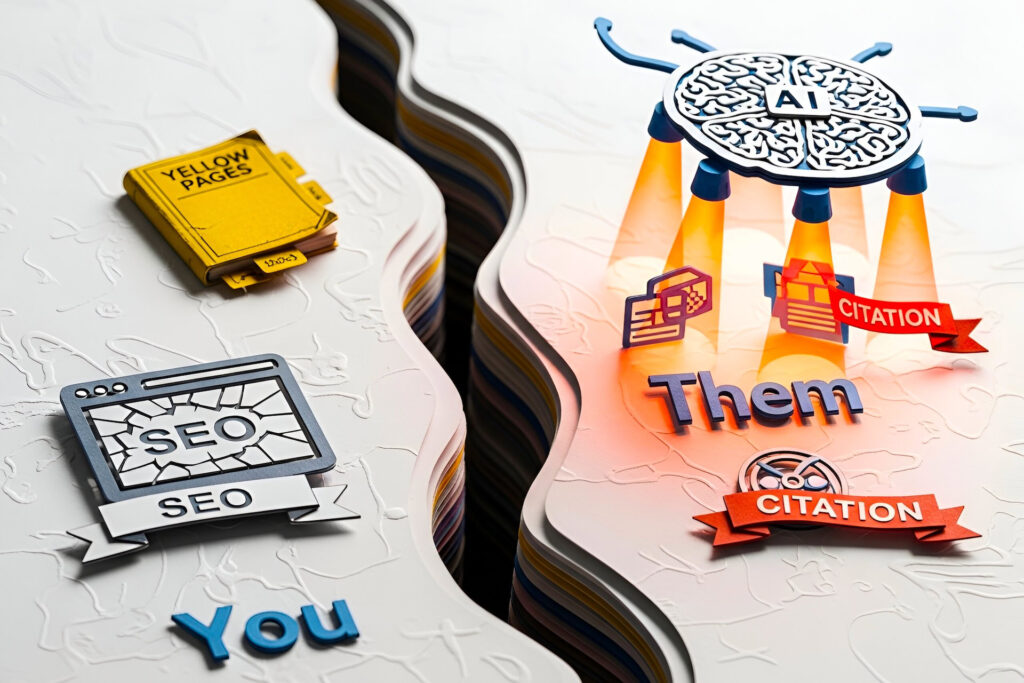
Imagine spending a sizable investment on a stunning new website, only to realise that while people are “finding” you, nobody is “choosing” you. In 2026, industry data suggests that nearly 60% of searches now end without a single click because AI search results provide answers directly on the page. To truly Boost Sales Conversions, you must move beyond traditional SEO and embrace a Human-Centric Architecture. Learning how to increase sales conversions with SXO is no longer a luxury; it is the only way to ensure your brand is the one “chosen” by both the machine and the customer.
- Why SXO matters: AI models (like Gemini, Claude, Perplexity and ChatGPT) prioritise content that demonstrates high user engagement and low bounce rates—hallmarks of good SXO.
- How it works: By integrating technical Schema with human-centric design, you create a “Digital Paper Trail” that allows AI to verify your authority.
- The Conversion Link: SXO reduces “pogo-sticking,” signalling to AI engines that your site is a definitive, high-value source.
The “Chosen” Phase: Why Architecture Beats Design
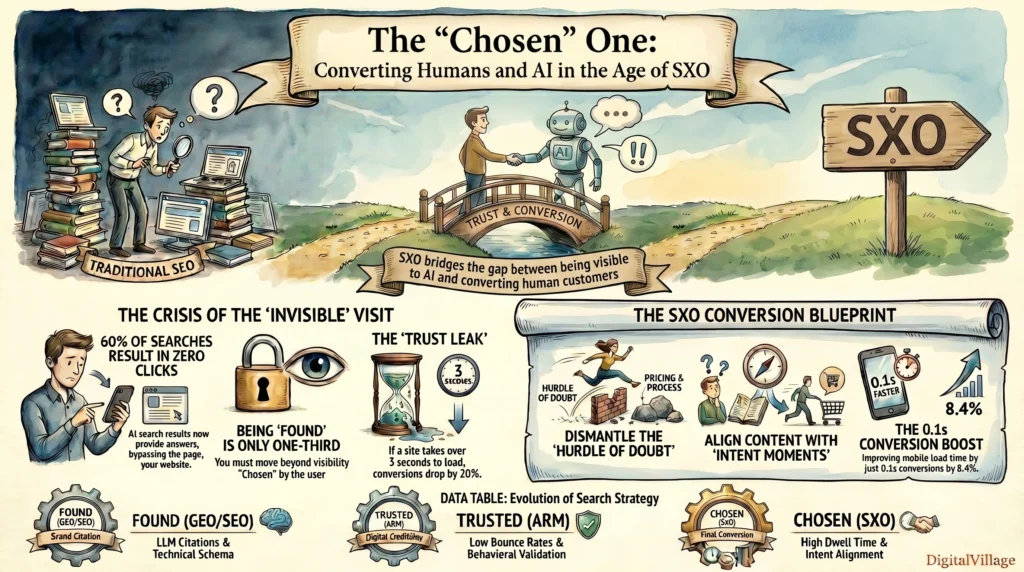
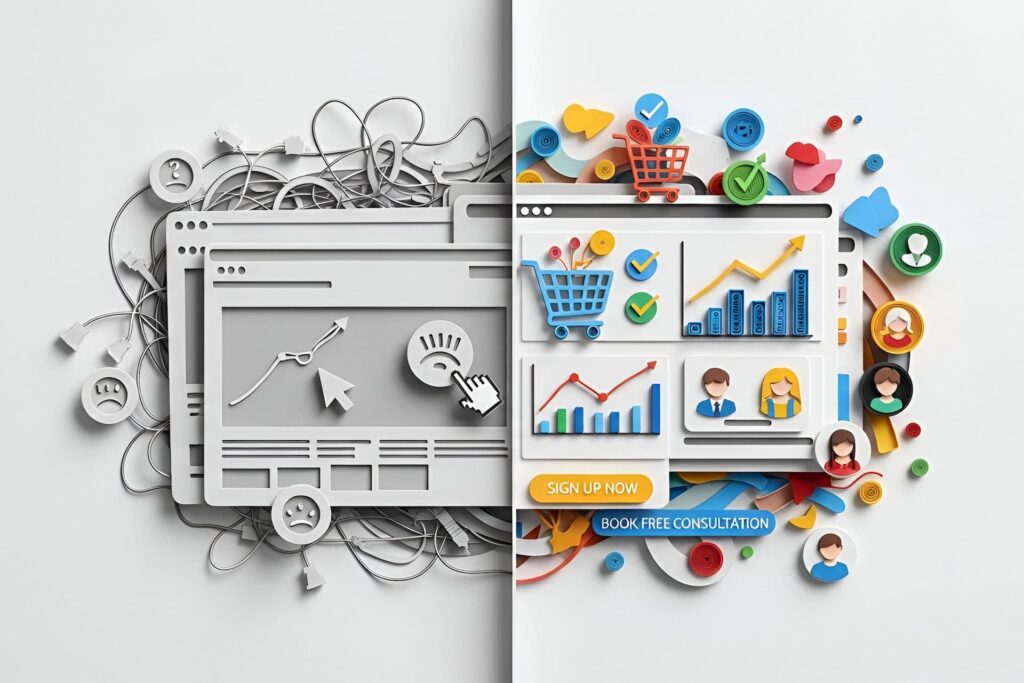
As we discussed in our previous article on Be Found, Trusted & Chosen: Website Redesign for Conversions, being “Found” is only the first third of the battle. To actually win the “Trusted” and “Chosen” phases, you must eliminate the friction points that turn warm leads into cold exits. This requires a fundamental shift: moving from a product-centric pitch to a customer-centric solution.
1. Stop Hiding Your Superpowers (The USP Gap)
Many Malaysian SME websites bury their Unique Selling Proposition (USP) deep inside a “Company Profile” paragraph. If a business owner has to read three paragraphs to find out why you are better than the shop next door, you’ve already lost.
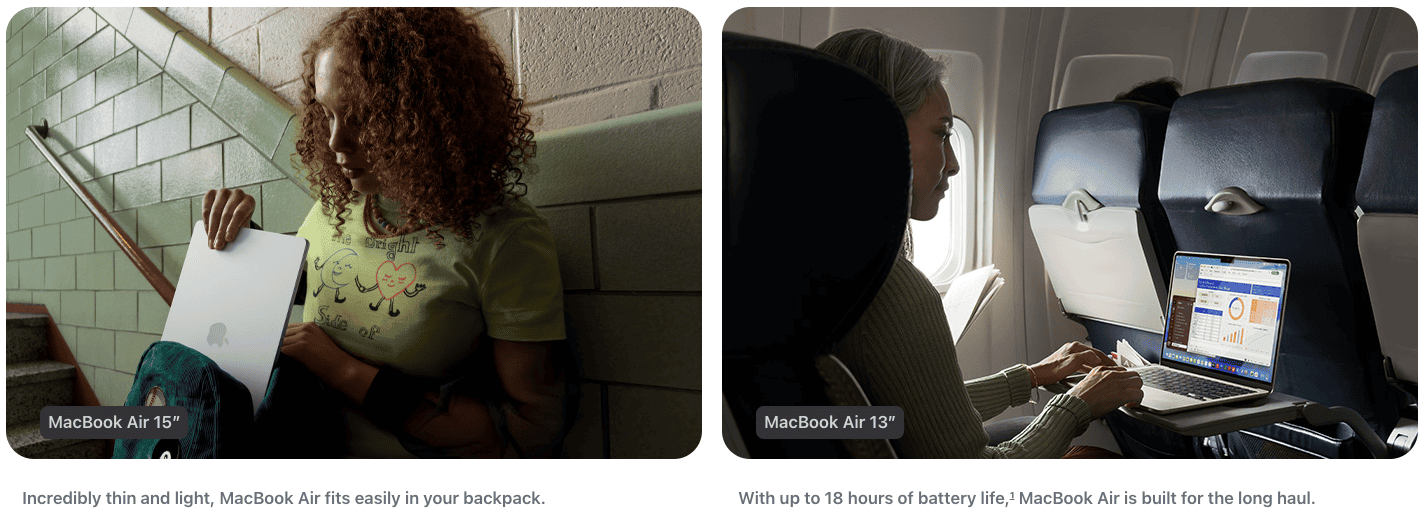
Apple understands that for a USP to be effective, the customer—not the product—must be at the center of the value proposition. In their marketing for the M5 MacBook Air, they translate technical specs into “lifestyle solutions.”
They solve two major friction points—portability and battery anxiety—without a single line of jargon. By showing the product in the “messy middle” of real life, they ensure their USP is perceived as a tool for a more productive day, rather than just a piece of hardware.
The Architect’s Insight: (Our strategic take on structural authority)
If your website’s “Hero Section” uses the word “We” more than the word “You,” you’ve made yourself the center of the proposition. To Boost Sales Conversions, flip the narrative. Make the customer the protagonist and your product the tool that empowers their journey.
Key Action: Stop listing “What it is” and start showing “What it does”. Move your USPs out of the dense text and translate them into visual “superpowers”. Use icons or imagery that place the customer in a successful future where their problem is already solved.
2. Convince the Mind, Move the Heart

The biggest “lead killer” in local tech and service sectors is being product-centric. Your customer doesn’t care about your technical “specs”; they care about the transformation those specs provide.
Volvo safety marketing is a prime example. They don’t start with technical schematics of “Boron steel reinforcements”. They show a mother’s genuine smile as she looks at her child, safe in a booster seat. The implicit headline isn’t a list of specs; it’s a feeling: “Protect what matters most.”
Key Action: Use high-fidelity, photorealistic imagery to visualise the “After” state of your service. Convince the mind with facts, but move the heart with the outcome.
3. The Speed of Trust: Eliminating Technical Friction
In the machine war, “Fast” is the baseline for entry. A slow website isn’t just a technical fail; it’s a “Trust Leak”. If your site takes more than 3 seconds to load, your sales conversions drop by nearly 20% for every additional second.
Deloitte conducted a study on mobile site speed and found that a mere 0.1s improvement in load time led to an 8.4% increase in conversions for retail sites and a 10.1% increase for travel sites.
The SXO Shift: Friction isn’t just a slow server; it’s a “Leaky Sales Flow.” If a customer has to click four times to find a WhatsApp link, you are taxing their “Cognitive Load.”
Key Action:
- Audit Perceived Performance: Use Google PageSpeed Insights to identify “Core Web Vitals” issues.
- One-Click Architecture: Ensure your primary call-to-action (e.g., “Book Consultation”) is visible within 2 seconds of landing
4. Dismantle the Hurdles of Doubt
Every prospect arrives at your site with a “hurdle of doubt”. Is it too expensive? Will it work for my specific niche? Can I trust their 20-year claim? If your website doesn’t proactively dismantle these doubts, you are forcing the customer to carry the emotional “risk” of the transaction. In SXO, we don’t wait for the customer to ask; we provide the answer before the doubt can take root.
Marcus Sheridan, author of They Ask, You Answer, transformed a struggling pool company, River Pools, into a global success by addressing the “Big 5” doubts (Cost & Price, Problems, Versus & Comparisons, Reviews, Best In Class) openly on his site. By publishing a transparent “How much does a fibreglass pool cost?” article, he generated over $35 million in sales from a single blog post.
The SXO Shift: Addressing these hurdles does more than just soothe a human lead. It provides Information Gain for AI Search models. When you answer the “difficult” questions, AI identifies you as a high-authority, transparent source, making it more likely to cite your brand in its “Trusted Recommendations”.
Key Action: The “Doubt Audit”. Identify the top three reasons a prospect says “no” or “not yet” to your service. Address them head-on with a “How it Works” flow or a Technical FAQ using JSON-LD Schema. Don’t hide your pricing or your process; transparency is the ultimate conversion tool.
5. Intent Alignment: Content that Matches the Moment
To Boost Sales Conversions, your content must mirror the user’s specific stage in the journey. Forcing a sales pitch on someone who is just looking for information is the fastest way to increase your bounce rate.
Terakeet analysed how aligning content with user intent impacts ROI. They found that brands prioritizing “informational intent” for top-of-funnel users saw a major increase in long-term conversion value compared to those only targeting “buy now” keywords. See the Terakeet Intent Study.
The SXO Shift: Map your pages to the user’s mental state.
- Informational Intent (The Curious Sceptic):
- Example: A user searching “Are EV batteries actually sustainable?”
- The Strategy: They are in Research Mode. If you show them a “Buy Now” button, they’ll leave. They need deep insights and transparent data. By being the one to solve their doubt, you become the Authority Entity they trust and remember.
- Transactional Intent (The Ready Buyer):
- Example: A user searching “Tesla Model Y vs. Zeekr 7X monthly installment.”
- The Strategy: They have moved past the “Why” and are on the “Which”. They need a clear Value Proposition, social proof and a frictionless path to action.
The Architect’s Insight:
Intent alignment is about digital empathy. If you try to close a sale before you’ve satisfied the user’s initial curiosity, you haven’t built a funnel; you’ve built a barrier. Mapping intent ensures you are the right person at the right time. To master this psychological layer of discovery, you must first unlock the mechanics of Search Intent SEO to ensure your content perfectly mirrors the user’s journey.
Action Points:
- Categorise Your Pages: Identify which pages are for “Education” (Top of Funnel) and which are for “Conversion” (Bottom of Funnel).
- The V.U.C. Structure: Ensure every conversion page has a Value Proposition, USPs (visual bullet points), and a clear Call to Action.
The Strategic Capstone: SXO as “Entity Verification”
When an AI like Gemini or ChatGPT decides whether to cite your brand, it performs a silent check: “Is this site a dead end, or is it a high-value destination?” SXO is the process of Entity Verification. By optimizing the search experience, you send a series of Contextual Signals to the AI:
- Behavioural Validation: High dwell time tells the AI your brand is a definitive solution, not just a surface-level match.
- Frictionless Accessibility: AI models prioritise sites with high Technical UX (Core Web Vitals) as “safe” recommendations.
- Semantic Congruency: Using structured data (Schema) allows AI to map your expertise into its Knowledge Graph.
The Architect’s Insight:
AI models recommend the path of least resistance. SXO is the process of proving to the machine that your site is the lowest-friction, highest-value destination for the user’s specific problem.
Ready to Architect a Website That Doesn’t Just Rank, But Converts?
The goal of this article isn’t to mirror the strategies of giants like Apple or Airbnb; every business is a unique entity. Instead, we want to challenge you to rethink your current path. Let’s start a conversation to architect a conversion strategy tailored specifically to your expertise.
Is your website “Found” but never “Chosen”? Don’t let your authority get lost in the digital paper trail. Let us help you build a growth ecosystem that speaks to both AI and humans.
Frequently Asked Questions
What is the difference between SEO and SXO—and how does it Boost Sales Conversions?
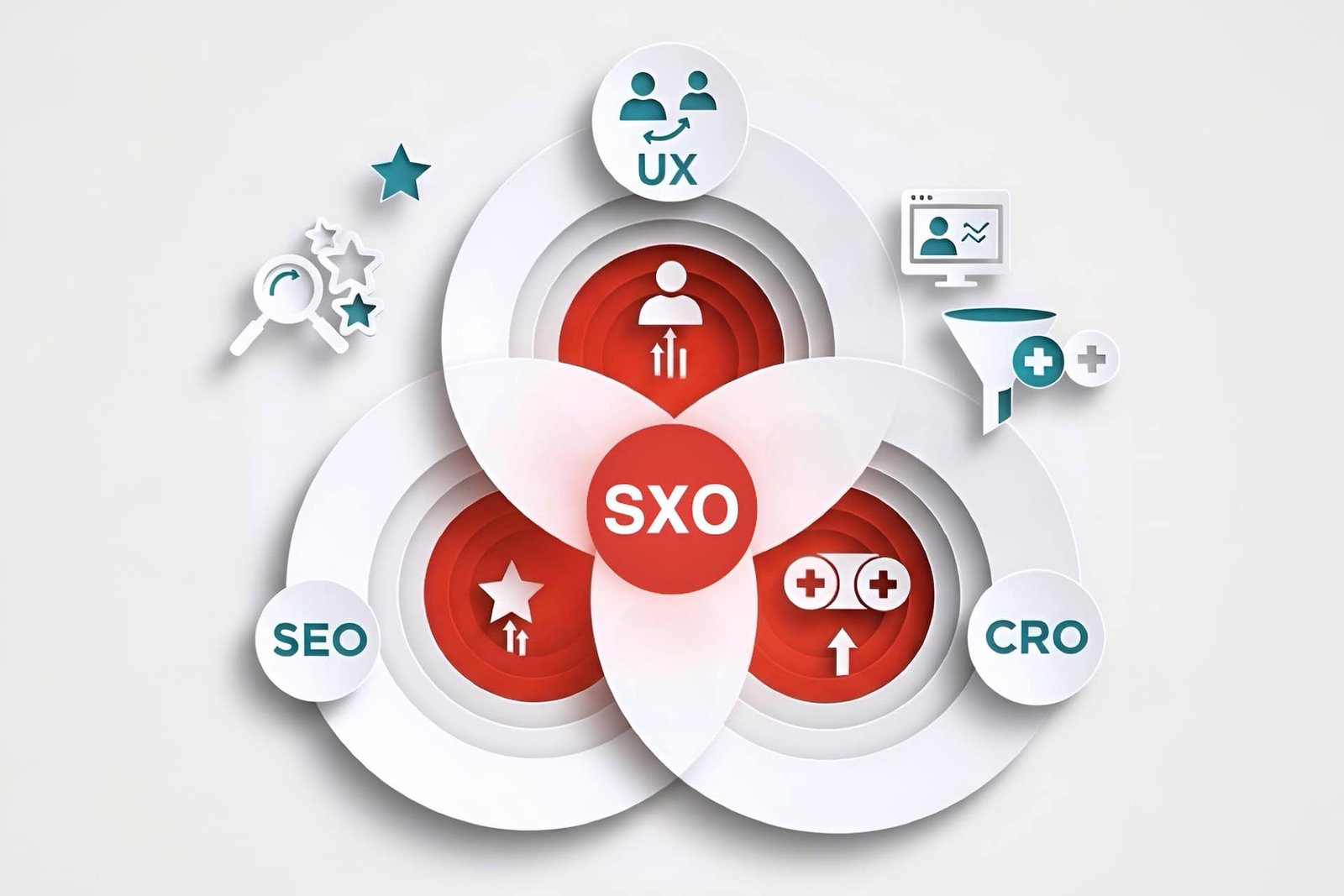
While traditional SEO focuses on bringing the “horse to water” (generating raw traffic), SXO (Search Experience Optimisation) is the engine that ensures the “horse drinks” (the conversion). To Boost Sales Conversions, SXO merges the technical visibility of SEO with the psychological triggers of User Experience (UX) and Conversion Rate Optimisation (CRO). It’s the difference between merely being “seen” in a search result and being the definitive brand the customer decides to “hire.”
How does AI Search affect my sales conversions?
In the current landscape, AI Search (like Gemini or ChatGPT) often provides a “Zero-Click” result—meaning it answers the user’s basic question directly on the search page. If your website only provides generic information, the AI will “harvest” it, and the user will never need to visit your site. This effectively “leaks” your potential sales conversions to the search engine itself.
To Boost Sales Conversions in this environment, your site must move beyond surface-level facts and provide “Human-Led Insights” and Information Gain. This means:
- Proprietary Frameworks: Sharing unique methodologies (like our Found, Trusted, Chosen framework) that an AI cannot find elsewhere.
- Case Studies & Proof: Providing visceral, real-world examples and data that AI cannot “hallucinate” or replicate.
- Specific Expertise: Offering deep-dive strategic advice that forces the user to recognize you as the human authority they need to hire, not just a source of information.
The SXO Goal: We give the user enough “Information Gain” to prove our expertise, but keep the “Execution Blueprint” behind a click. You give them a reason to leave the AI interface and enter your Growth Ecosystem.
Can SXO help a small local business compete with big brands?
Yes. Because SXO rewards experience over raw budget, a well-optimised SME site that answers local needs perfectly can often out-convert a generic corporate giant.
Why isn’t my current SEO agency helping me boost sales conversions?
Most traditional agencies focus strictly on “vanity metrics” like keyword rankings and raw traffic. However, to boost sales conversions, you need a strategy that goes beyond the click. While they might get you “Found,” our SXO approach ensures you are also “Trusted” and “Chosen” by addressing the psychological friction points that prevent a lead from taking action.
How do I know if AI Search is actually hiding my website from potential clients?
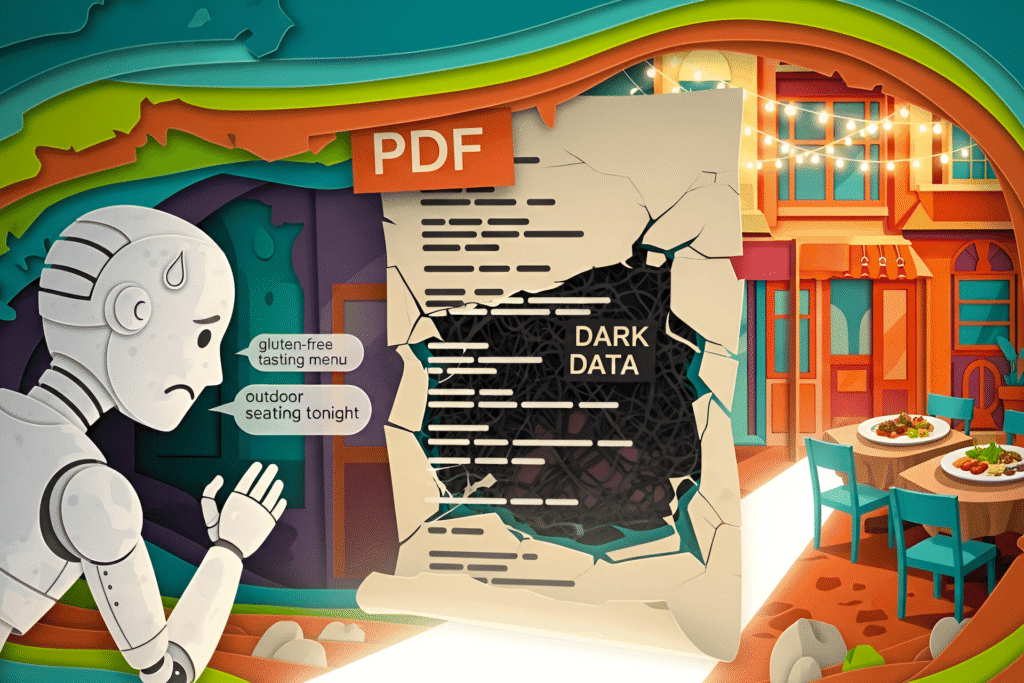
If your website lacks technical “Authority Architecture” (like JSON-LD Schema), AI Search engines may struggle to categorize your business correctly, leading to “Zero-Click” results where the AI answers the query without mentioning your brand. By learning how to increase sales conversions with SXO, you ensure your data is machine-readable and human-centric, forcing AI models to cite you as the definitive expert.
Is it expensive to pivot my digital strategy toward SXO and AI search?
The real expense is the “Opportunity Cost” of losing high-ticket leads to competitors who have already modernized. Investing to boost sales conversions through SXO is a future-proofing move; it reduces your long-term ad spend by making your organic traffic work harder for you. Instead of constantly buying new traffic, you are optimizing the experience to ensure more of your current visitors turn into revenue.