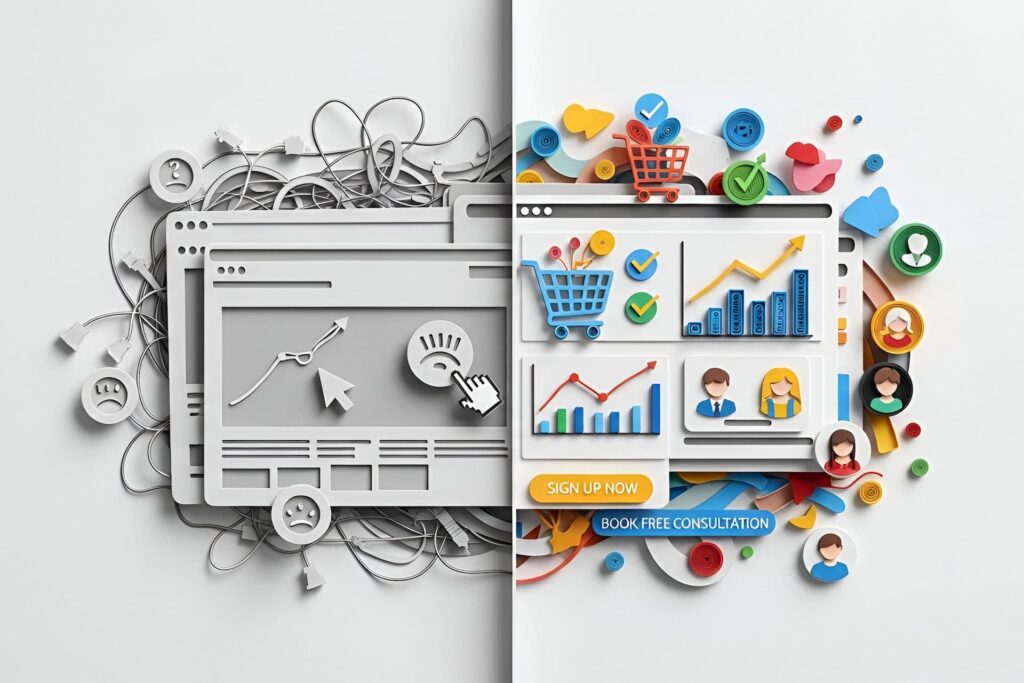
In the global business landscape today, a “pretty” website is no longer enough to stay ahead. If your digital presence isn’t actively generating leads, you are likely suffering from a performance gap that only a website redesign for conversions can bridge. Most businesses treat their site like a digital brochure, but market leaders treat it as their most aggressive salesperson. To move from a “ghost site” to a global market-dominating engine, you must master the three pillars of high-performance design.
- Website Redesign for Conversions Definition: A 3-step architectural path (Found, Trusted, Chosen) that moves beyond cosmetic “facelifts” to align machine-readability with human psychology.
- The Machine Layer (Be Found): Emphasizes the shift to Entity-Based Discovery and the use of structured data (Schema) to ensure AI search engines can confidently recommend the business.
- The Psychological Layer (Be Trusted): Focuses on eliminating the Trust Deficit by using B2B Trust Signals to pass the immediate “credibility test” that users perform when landing on a site.
- The Congruency Loop: Highlights the necessity of a unified “digital handshake” where social proof and professional bios match the real-world reputation to prevent high bounce rates.
- The Conversion Layer (Be Chosen): Aims to close the Digital Authority Gap by positioning the brand as a “Thought Leader,” making it the only logical solution for high-value clients.
- Narrative Architecture: Advocates for proactive control over the digital narrative to satisfy the requirements of AI models and human decision-makers simultaneously.
1. Be Found: GEO and the Future of Website Redesign for Conversions
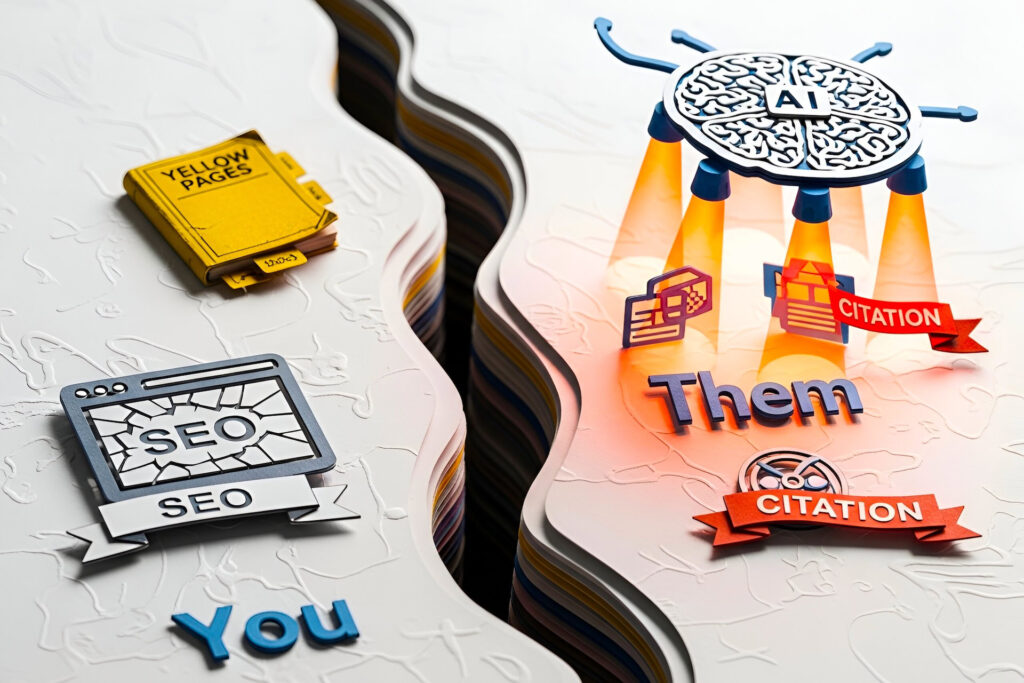
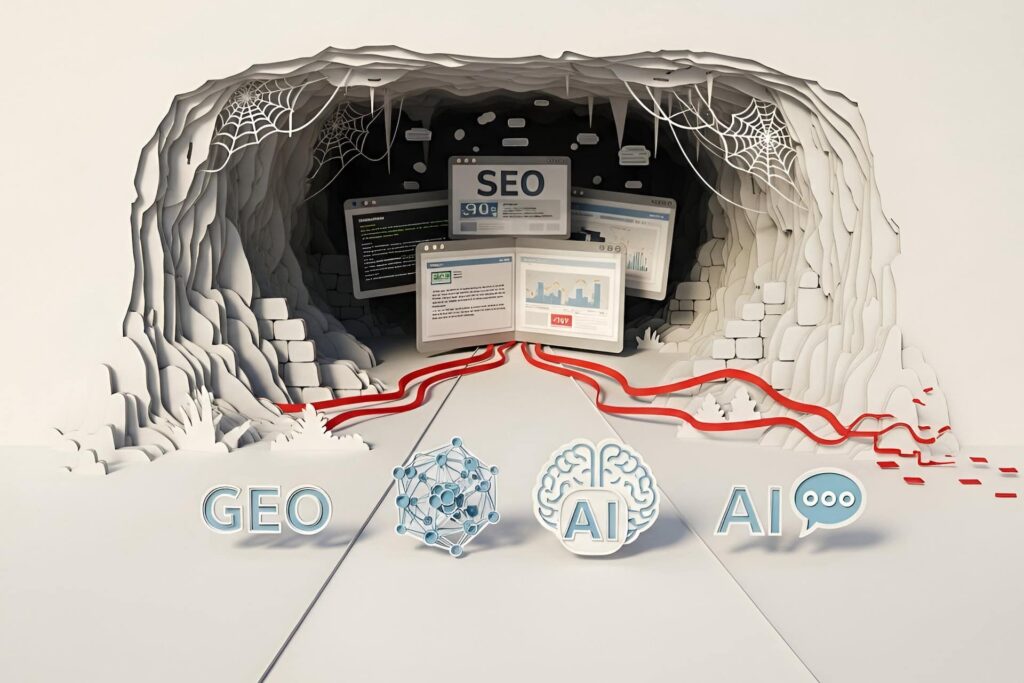
Visibility has evolved beyond the “Top 10” blue links. With the rise of AI-driven search, a modern website redesign for conversions must incorporate Generative Engine Optimization (GEO). This ensures that when a potential client asks an AI—like Google Gemini or ChatGPT—for a recommendation, your business is the one it cites as the authoritative source.
- Global Authority: We optimize your site for “Semantic Search,” ensuring you are found not just by what you sell, but by the problems you solve for a global audience.
- AI-Ready Structure: We move beyond keywords to “entity-based” SEO, structuring your data so AI models can easily summarize your expertise.
- The “Citation Bonus”: Being cited in an AI Overview can increase organic clicks by up to 35%. We optimize your content for “Information Gain”—providing unique insights that AI engines love to quote.
2. Be Trusted: Building the Credibility Machine
In the current search landscape, trust is no longer inferred—it is verified. A high-performing website redesign for conversions doesn’t just claim authority; it provides a multi-layered “Credibility Buffet” that satisfies both human skepticism and AI scrutiny (E-E-A-T).
To bridge the authority gap, your redesign must prioritize these six credibility cues:
- Human-Centric Social Proof: Static, text-only quotes are easily faked and largely ignored. Modern trust is built through User-Generated Content (UGC) and Video Testimonials. Seeing a real person, in their real environment, describing a specific problem you solved is the ultimate risk-reducer.
- Result-Driven Case Studies: Move beyond “Our Services” and start telling “Success Stories.” A credible case study includes a clear Challenge, Solution, and Measurable Outcome. Global clients want to see the “Before and After”—proven by screenshots, dashboards, and growth statistics.
- The Power of Statistics: “We are the best” is a claim; “We improved client ROI by 42% in 90 days” is a fact. High-converting sites use data visualization (charts, counters, and impact metrics) to turn abstract promises into concrete evidence.
- Third-Party Recognition: Your website should act as a hub for external validation. This includes:
- Certifications & Accreditations: Industry-specific badges (e.g., ISO, Google Partner, CIDB) that prove you meet global standards.
- Awards & Media Mentions: Icons of news outlets, podcasts, or industry awards that signal you are a recognized leader.
- The Face of Authority: AI search engines (GEO) now look for “Author Entities.” Credibility involves showcasing the people behind the brand—professional biographies, published thought leadership, and certifications that prove you have the Experience and Expertise to deliver.
- Trust Badges & Security Cues: With 2026’s heightened focus on data privacy, visible security seals and clear “Verified Purchase” badges reduce the “friction of fear” during the final moments of a decision.
3. Be Chosen: Mastering Brand Recall & Digital Proximity
In the global landscape, “being chosen” is the result of constant, subtle visibility paired with high-impact sales copy. Data from Statista show that the average person now spends 2 hours and 21 minutes daily on social media, engaging with an average of 6.7 different platforms every month. This multi-platform behavior is critical for brand recall; according to GWI 52% consumers still turn to search engines for brand research. If your presence is restricted to Google, you are missing the primary environment where HubSpot reports that Social media is the #1 product discovery channel.
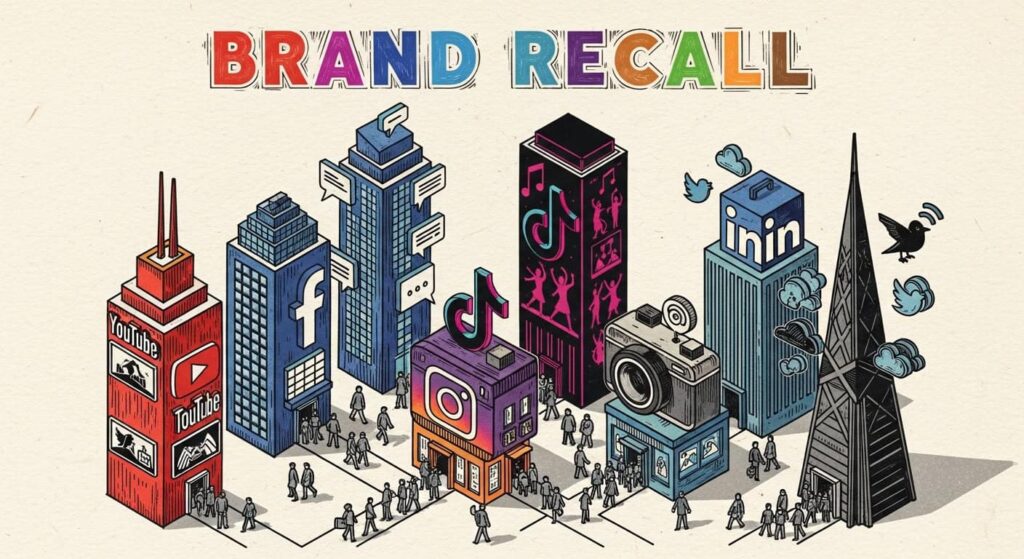
- Omnichannel Conversion Architecture: True market dominance happens when your website and social presence act as one ecosystem. A user might “find” you on an AI search engine (GEO), “trust” you via your LinkedIn case studies, and finally be “chosen” because your brand was top-of-mind when they saw your targeted ad. The secret ingredient? Consistent Sales Copy. Whether they are reading a caption or a technical whitepaper, the voice must be unmistakably yours—persuasive, authoritative, and aligned with their pain points.
- The Proximity Principle: Brand recall is built through “omnichannel” presence. It is no longer enough to have a great website; your brand must “follow” the user. Effective sales copy adapts to the platform: a LinkedIn thought-leadership post builds the “Logic,” a retargeted Instagram story triggers the “Emotion,” and your high-converting landing page provides the “Action.” This strategic repetition ensures you are the only logical choice when they are ready to buy, and finally leading them back to your high-converting landing page or your physical store.
- The Trust of the “Familiar”: Psychological studies in 2026 confirm that familiarity breeds trust. Consumers are 35-40% more likely to spend with a brand they have interacted with on social media. By being where they spend their “leisure” time—and communicating with copy that resonates with their needs—you move from being a cold service provider to a familiar, trusted industry authority.
Beyond a Website Redesign for Conversions—Building Your Digital Ecosystem
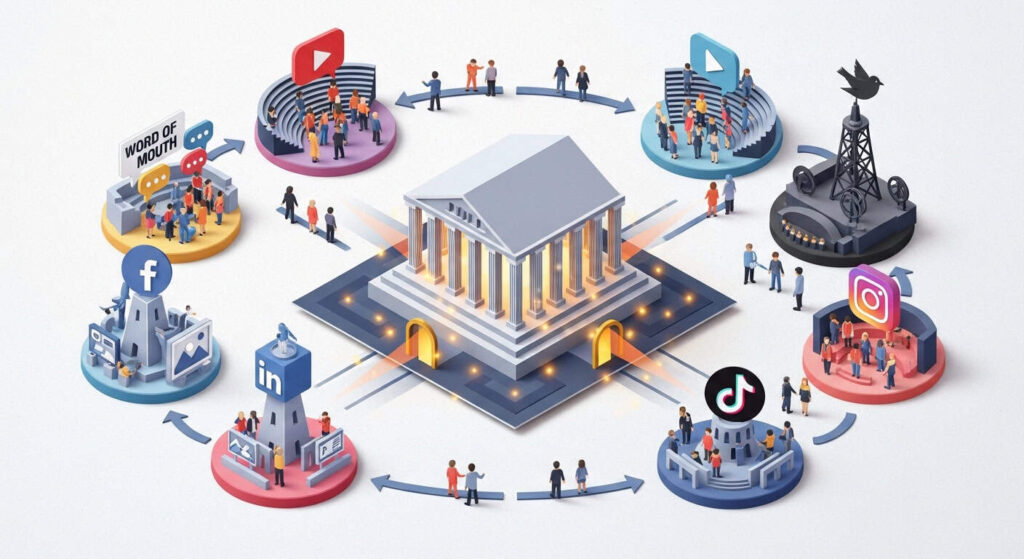
While the technical mechanics of social media presence fall outside the direct scope of a website redesign for conversions, your site serves as the central hub of a much larger digital ecosystem. You can achieve market dominance when your website and social presence work in tandem to achieve three critical objectives:
- Be Found: Your business is engineered for GEO (Generative Engine Optimization), ensuring you are not just a link on a page, but a primary authority cited by AI search engines.
- Be Trusted: You move beyond claims by providing a “Credibility Machine” of case studies, UGC, and verifiable certifications that satisfy both human skepticism and AI trust filters.
- Be Chosen: You win the final click because you have moved from a cold search result to a permanent resident in the customer’s mind. You are chosen because you are found, trusted, and—above all—remembered across every platform where your audience spends their time.
Frequently Asked Questions
1. What is the difference between a standard redesign and an “AI-Ready” redesign?
A standard redesign focuses on aesthetics and basic mobile responsiveness. An AI-Ready redesign (Generative Engine Optimization) re-architects your site’s underlying data and authority signals so that AI engines like ChatGPT and Gemini can easily discover, understand, and cite your brand as a primary source for user inquiries.
2. How does “Authority Architecture” improve website conversion rates?
Authority Architecture is about more than just looking professional; it involves strategically placing “Trust Signals”—such as case studies, E-E-A-T (Experience, Expertise, Authoritativeness, Trust) content, and cinematic storytelling—to dismantle prospect objections. By establishing yourself as the “Gold Standard” before the user even clicks a CTA, you reduce friction in the decision-making process.
3. Will a website redesign hurt my current Google rankings?
If done incorrectly, yes. However, a strategic redesign includes a SEO Migration Plan. We handle 301 redirects, maintain URL integrity, and optimize page load speeds. Most of our clients actually see an increase in rankings and organic traffic because the new “AI-Ready” structure is easier for both traditional and generative search engines to crawl.
4. Why is “Market Memorability” critical for high-ticket service providers?
High-ticket clients rarely buy on the first visit. Market Memorability uses psychological branding and visual storytelling to ensure your brand stays “top of mind” after the user leaves your site. By creating a cohesive brand presence across all digital touchpoints, you ensure that when the prospect is finally ready to buy, yours is the only name they remember.
5. How do I know if my current website is “leaky” and losing conversions?
A “leaky” website is one where visitors arrive but fail to take action. Common signs include high bounce rates, low time-on-page, and a lack of citations in AI search results. If your expertise is buried in outdated layouts or slow-loading pages, you are losing potential clients to competitors who have already transitioned to a modern Growth Ecosystem.