
Imagine you’ve spent years growing your business only to wake up one Monday morning to a notification: a 1-star review alleging your service was “unprofessional”. Your heart sinks. In Malaysia, where word-of-mouth is digital currency, knowing how to fix bad online reviews is no longer just a PR skill—it is a survival tactic.
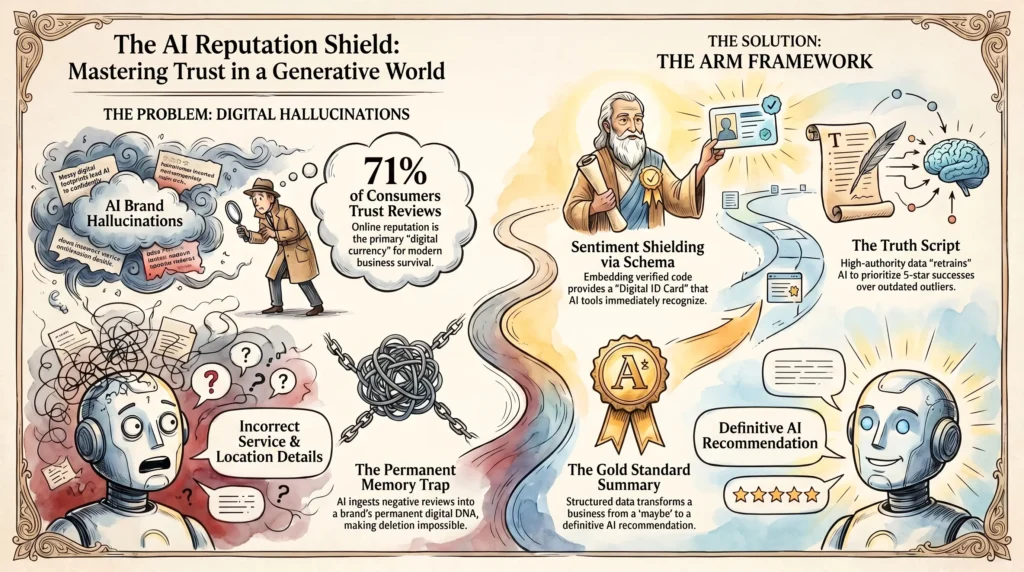
- Impact of Online Reviews: According to the Malaysia Cyber Consumer Association (MCCA), 71% of Malaysians consider online reviews before making a purchase, making digital reputation a critical factor for business survival.
- AI Brand Hallucinations: Messy digital footprints and outdated information trigger “hallucinations” where AI assistants confidently share incorrect details, such as the “Location Myth” (incorrectly stating a business only serves specific areas).
- The ARM Framework: AI Reputation Management (ARM) goes beyond traditional damage control by providing a “truth shield” that influences how models like ChatGPT and Google Gemini summarize a business.
- Sentiment Shielding via Schema: By embedding verified code (Schema) that AI immediately recognizes, businesses provide a high-definition “Digital ID Card.” This retrains AI to prioritize current 5-star successes over outdated 1-star outliers.
- The Gold Standard Summary: Using structured data to organize information into machine-verifiable formats allows a business to move from a “maybe” to a definitive recommendation, ensuring a professional and bespoke brand “vibe.”
The stakes have never been higher for local businesses. Recent data indicates that 71% of Malaysians now take reviews into account before making an online purchase, according to Malaysia Cyber Consumer Association (MCCA) deputy president Azrul Zafri Azmi. Consequently, a single unchecked negative comment can act like a digital “closed” sign on your shopfront. However, a bad review isn’t a death sentence. By leveraging AI Reputation Management (ARM), you can transform these digital hurdles into a “truth shield” for your brand.
The ARM Framework: Your Brand’s Identity Shield
At DigitalVillage, we go beyond simple damage control. We help SMEs influence how AI models—like ChatGPT and Google Gemini—summarise their business. Similarly to how a traditional village elder mediates a dispute, ARM brings clarity and authority back to your digital presence.
1. Factual Accuracy & Anchor Data
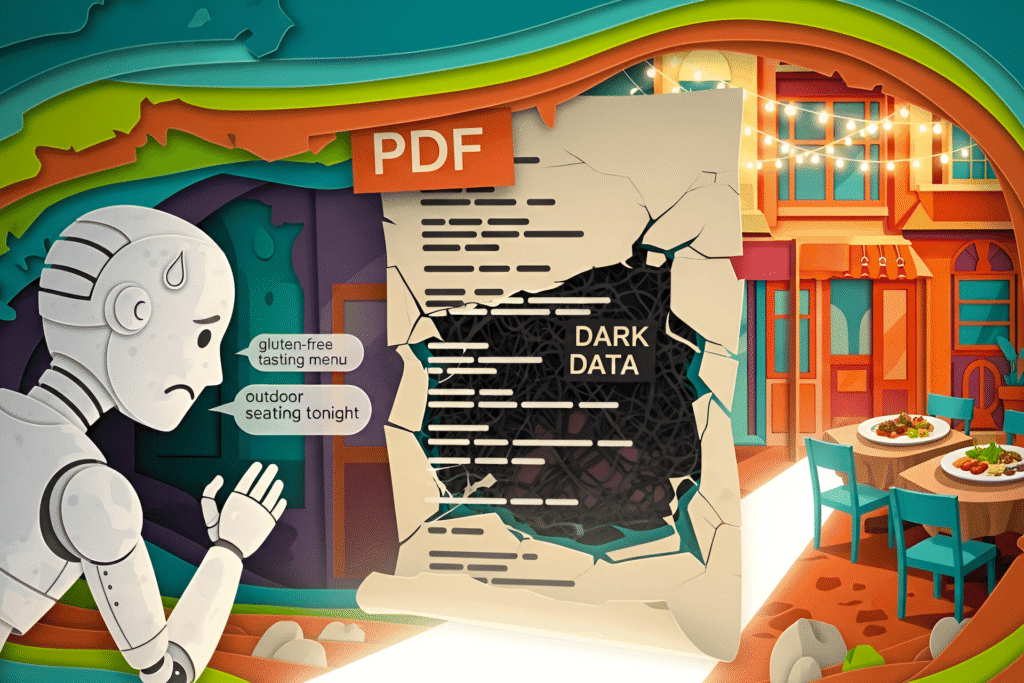
The biggest mistake SMEs make is leaving outdated information online, which triggers AI brand hallucinations. Furthermore, if your digital footprint is messy, AI assistants might confidently share incorrect details about your location or services. We ensure AI correctly identifies your current success metrics. This prevents the “Location Myth,” where an AI might tell a potential client in Penang that you only serve Kuala Lumpur.
2. Sentiment Shielding
Action speaks louder than a deleted comment. On the other hand, you cannot “delete” an AI’s memory once it has scraped a negative review; once that data is ingested, it becomes part of your brand’s permanent digital DNA. Instead, we use ARM to perform Sentiment Shielding, a process that essentially gives the AI a “Truth Script” to follow.
Think of it as providing a high-definition “Digital ID Card” directly to the AI’s eyes using code that AI immediately recognises. By embedding this verified, official data into your website, we tell the AI exactly what your current 5-star ratings are and who your real customers are today. This “retrains” the AI to prioritise your recent successes over a random 1-star mistake from years ago. It is like being graded on your latest professional exam rather than a slip-up from primary school. This ensures that AI promotes your Gold Standard Summary instead of an outdated hallucination.
3. The Gold Standard Summary
The goal is to influence your brand’s “vibe”. When a CEO in Singapore asks an AI assistant about your track record, you want a summary that sounds professional and bespoke. While many SMEs overlook the technical side of branding, structured data is actually the key to being the “only answer” in an AI-driven market. By organising your information into a format that search engines and AI models can instantly verify, you move your business from a “maybe” to a definitive recommendation.
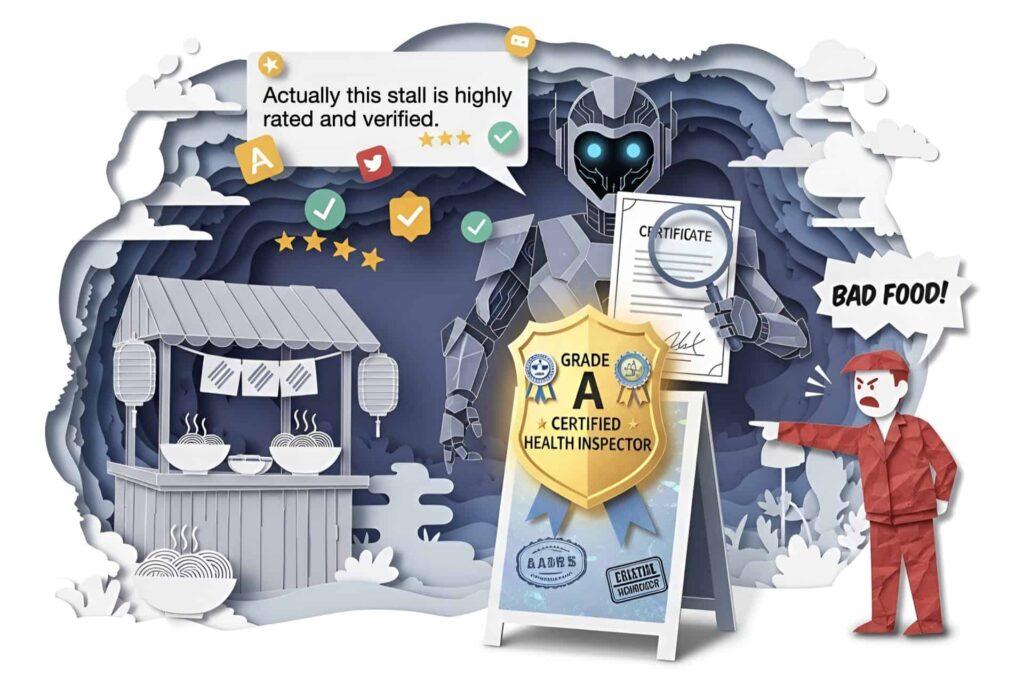
Using schema is like having a certified health inspector’s grade displayed on your stall; it is a powerful way to fix bad online reviews by providing a definitive counter-narrative. A random passerby might say your food is bad, but the “Grade A” certificate (your Schema) is the official data that AI trusts. Even if one person complains, AI sees your official records and tells others: “Actually, this stall is highly rated and verified.”
Reclaim Your Brand Today
- Audit Your AI Persona: Ask Gemini or ChatGPT what it thinks of your business.
- Update Structured Data: Ensure your “Service Areas” and “Client Success Stories” are explicitly readable by machines.
- Engage Professionally: Always respond to negative feedback to show the AI—and the public—that you are active and accountable.
In the rapidly evolving landscape we are living in, building a brand is no longer just about the physical storefront—it is about the community of trust you cultivate online. While your reputation may start with a human experience, its survival now depends on how accurately that experience is translated for the machines that guide today’s consumers. Whether it’s auditing your current AI persona on Gemini or updating the hidden “Digital ID Cards” that define your service areas, learning how to fix bad online reviews at the source is the first step toward long-term resilience.
Success in an AI-driven market doesn’t happen by accident; it’s the result of being the most verified, active, and accountable voice in your industry.
Frequently Asked Questions
Can you “delete” a bad AI response?
You cannot delete an AI’s training data, but you can “retrain” its perception. By providing a higher volume of recent, high-authority data, the AI will prioritise the new information over the old.
Why does ChatGPT still show my old office address?
This is due to “Knowledge Cut-off Dates”. ARM helps by creating updated, structured data that AI models with web-browsing capabilities can find and cite immediately.
Is ARM only for big corporations?
No. Malaysian SMEs are often more vulnerable to a few bad reviews. ARM provides a cost-effective way for smaller businesses to maintain “National Authority” and protect their brand integrity.