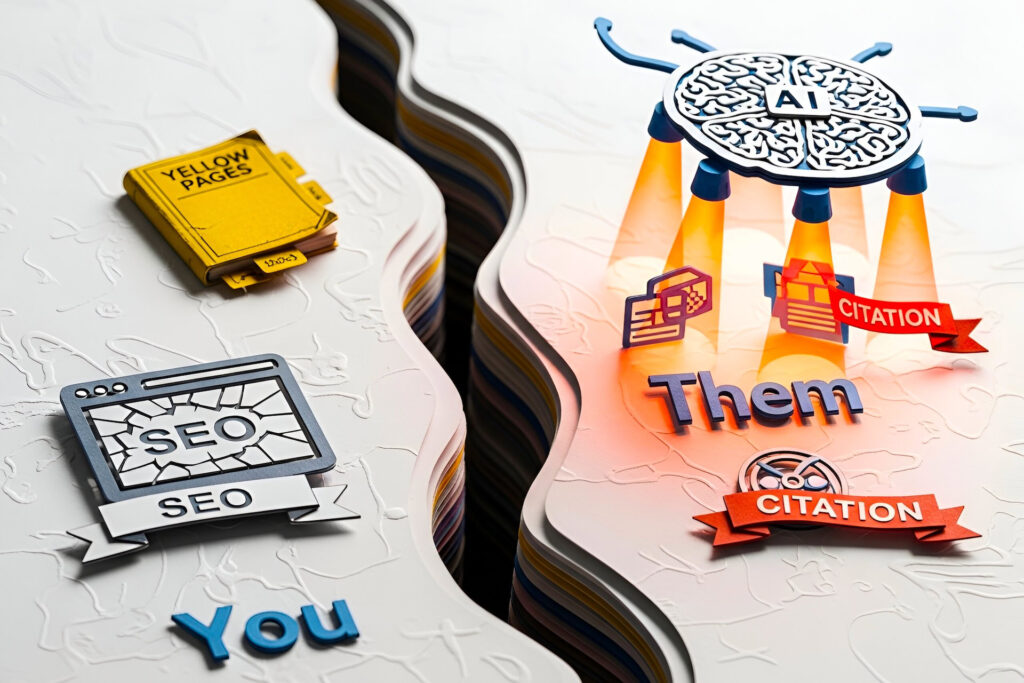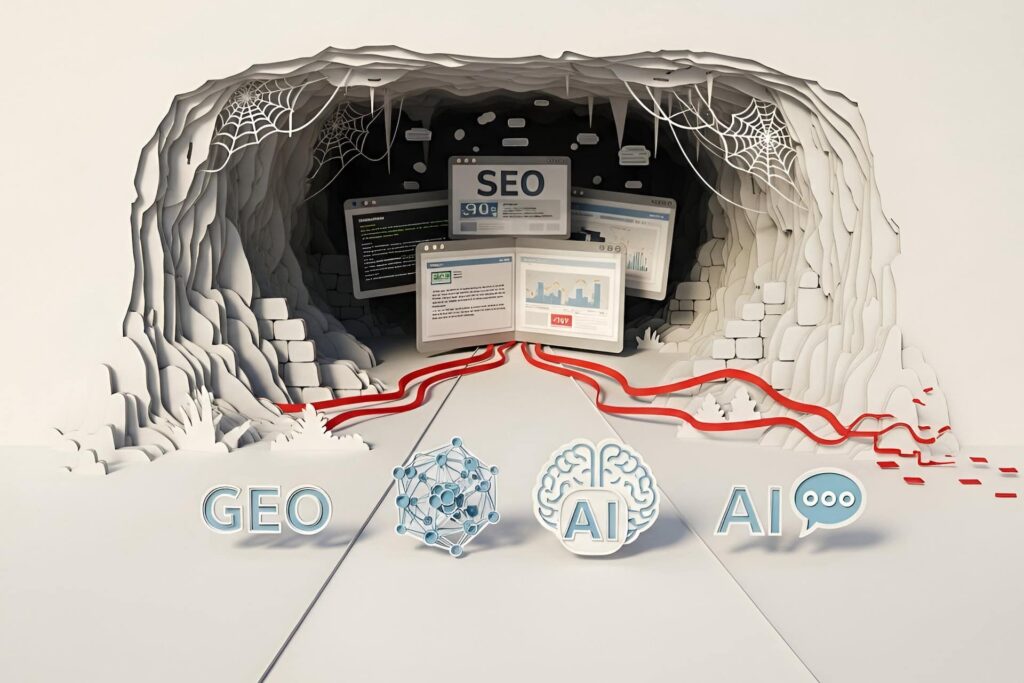
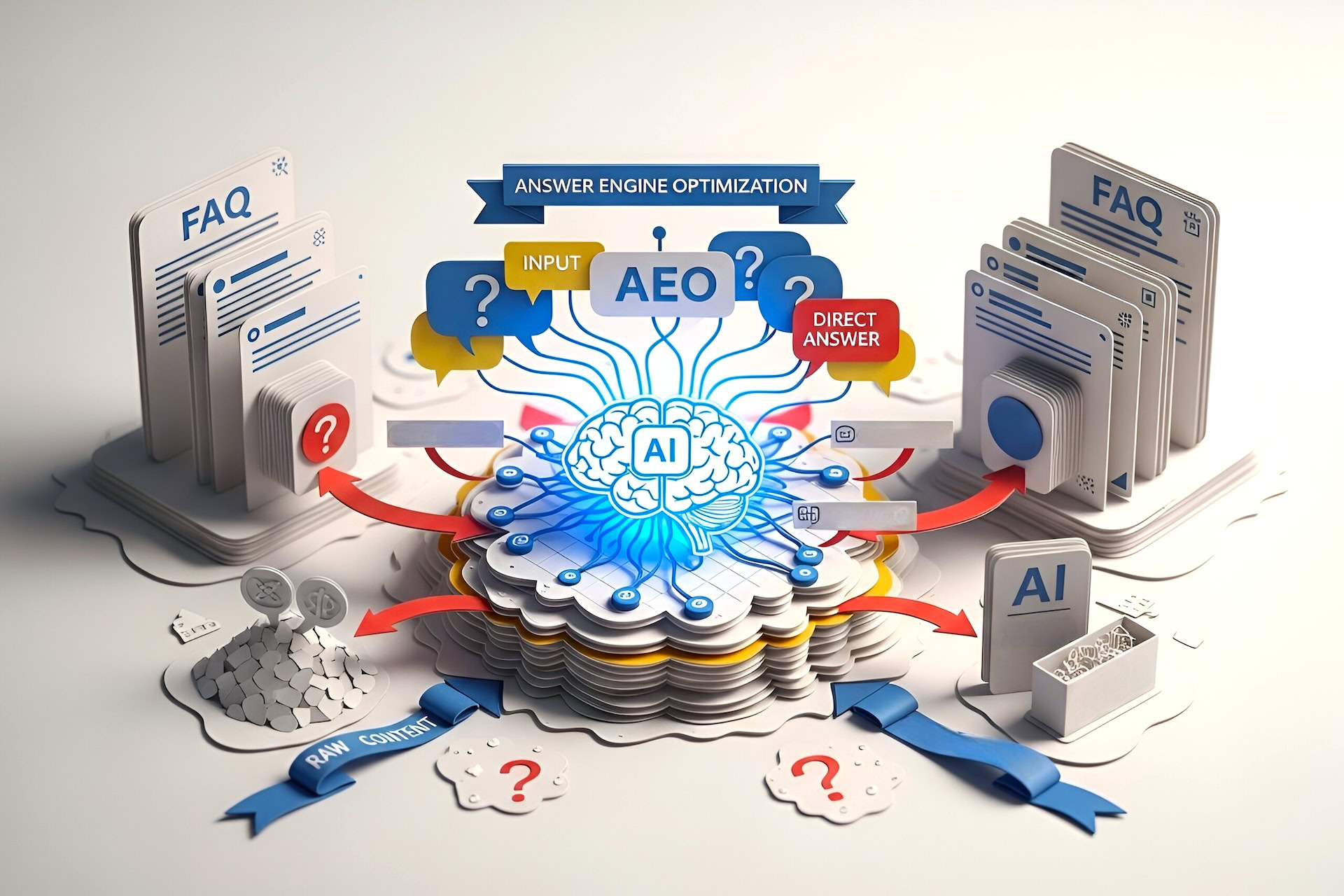
Imagine you are mid-conversation at a bustling tech hub in San Francisco or a shared workspace in London. You have a sudden, complex question about market trends, so instead of scrolling through pages of Google results, you simply ask the AI assistant on your phone. It gives you a direct, three-sentence answer. You got exactly what you needed, but the website that originally provided that data just lost a click. This is the new reality of the global digital landscape. With AI tools like Perplexity, ChatGPT, and Google’s Gemini becoming the “concierges” of the internet, traditional SEO is no longer enough. To stay relevant and maintain your competitive edge, you must master Answer Engine Optimization.
- The Why: Predictive Relevance: AI engines prioritize “cite-ability.” They hunt for authoritative sources that provide direct solutions. By aligning your writing with natural language patterns—the way experts actually speak—you match the AI’s predictive algorithms. It isn’t just about keywords; it’s about being the most logical next step in a conversation.
- The How: Answer-First Architecture: Lead every section with a 40–60 word “nugget” of truth. This is often called the BLUF method (Bottom Line Up Front). This directness positions your brand as the “source of truth.” When an AI cites your data, it builds a level of trust that a simple link cannot match.
- The Proof: Information Gain & GEO: Generative Engine Optimization (GEO) thrives on “Information Gain.” To win, you must provide something the AI hasn’t seen in a thousand other articles. Focus on H-E-E-A-T (Experience, Expertise, Authoritativeness, and Trustworthiness) by using proprietary data, case studies, and expert quotes. This proves your content is a reliable factual anchor, not a hallucination.
- The Structure: Machine-Readable Clarity: Use tables, bullet points, and question-based headers. AI models love structured data because it is easy to parse. As discussed in our previous guide on [The Evolution of Search Intent], the friction between the user and the information is rapidly disappearing; your job is to make the machine’s job easier.
The Shift from Searching to Asking
For decades, digital marketers played the keyword game. We optimized for “best CRM software” and hoped to land in the top three blue links. However, the game has changed because user behavior has fundamentally shifted. Modern users across the globe no longer want a list of links; they want a definitive, instantaneous answer.
Consequently, AI models act as sophisticated filters, scanning the vast expanse of the web to summarize information for the user. If your content isn’t structured to be “summarizable,” your brand essentially becomes invisible.
Why Your Current Strategy Might Be Leaking Clicks
Many global brands and tech startups are still pouring budgets into high-volume, short-tail keywords. While these are still useful for general brand awareness, they are increasingly being swallowed by AI-generated “zero-click” snippets.
Furthermore, reports from Gartner has forecasted that traditional search engine volume will drop by 25% by 2026. This isn’t just a technical update; it’s a paradigm shift in how information is consumed.
Similarly to how we once pivoted to mobile-first indexing, we must now pivot to “answer-first” indexing. As we explored in our previous guide on [The Evolution of Search Intent], the friction between the user and the information is rapidly disappearing.
Mastering the Art of Being the Answer
How do you ensure an AI engine picks your brand to answer a user’s query? It comes down to structure, authority, and clarity.
- Speak Human: Use conversational, natural language. If you sell enterprise security, don’t just list technical specs. Instead, answer the question: “How can a remote team prevent a data breach in 2026?”
- Structure for Scanners: Use tables, bullet points, and clear, descriptive headers. AI models love structured data because it is easy to parse and verify.
- The “Nugget” Method: Place your most valuable, “quotable” answer in the first two sentences of a section.
Creative Tactics for Answer Engine Optimization
To win in this space, you must think like a librarian, not just a marketer. You are categorizing knowledge for a very sophisticated digital researcher.
On the other hand, do not lose your brand’s soul in the process. Authenticity is a significant ranking factor for modern AI. Models are increasingly programmed to look for “Information Gain”—the idea that your content provides a fresh perspective or data point that isn’t already present in the top 10 search results.
The Road Ahead: Adapt or Fade
The global digital village is getting crowded, and the gatekeepers are getting smarter. By shifting your focus toward Answer Engine Optimization, you aren’t just chasing a temporary trend; you are future-proofing your business against the next decade of technological evolution.
Similarly to how early adopters of social media marketing won a massive market share in the early 2010s, those who capture the “Answer” spot today will define the market landscape of tomorrow.
Frequently Asked Questions
1. What is Answer Engine Optimization (AEO)?
AEO is the strategic process of optimizing your digital content to be the primary source for AI-driven “answer engines” like ChatGPT and Perplexity, focusing on clarity, directness and authoritative citations.
2. How does AEO differ from traditional SEO?
While SEO focuses on ranking in a list of search results, AEO focuses on being the singular, synthesized answer provided by an AI. It prioritizes the intent behind a question over rigid keyword strings.
3. Will AEO replace the need for a corporate website?
Not at all. Your website remains your digital “home base.” However, AEO ensures that your site’s data is the high-quality fuel that powers AI answers, driving high-intent users back to you for deeper engagement.
4. Is AEO only for big tech companies?
No. In fact, smaller, niche experts often have an advantage. By providing highly specific, expert answers to narrow industry questions, smaller players can often outshine broader, generic competitors.