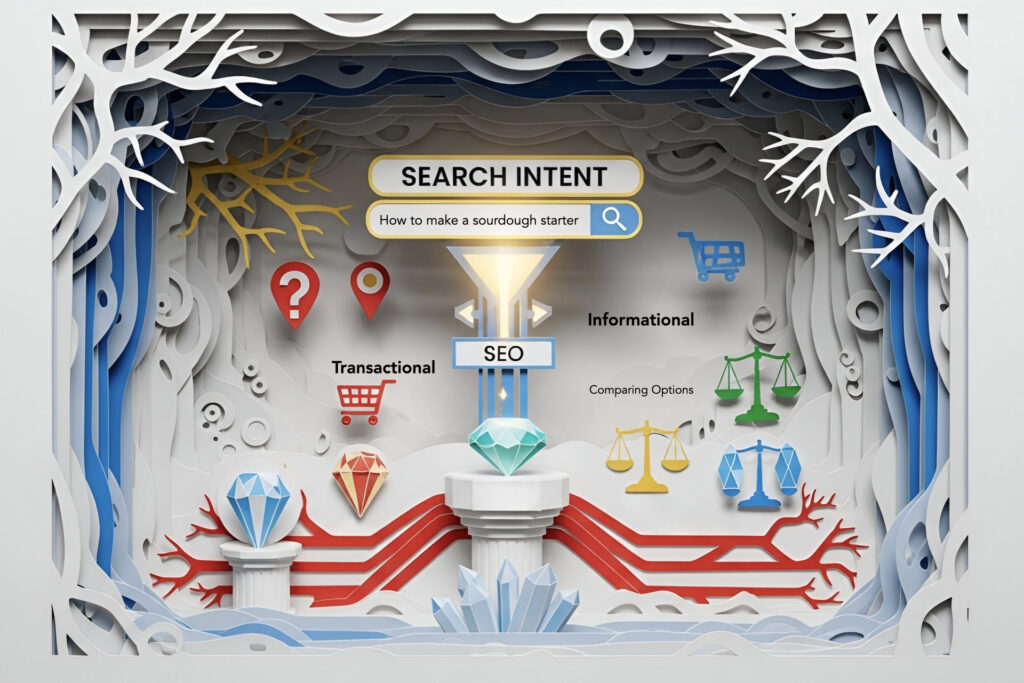

On August 26, 2019, Sheila Singam (founder of Human Equation) sat down in the BFM 89.9 studio for an episode on Forging Meaningful Relationships at Work. Her advice was empathetic, practical, and grounded in decades of real-world corporate consulting. Yet for years, that insight sat as unindexed audio sealed in a media server’s vault. This highlights a critical challenge for enterprise founders. Traditional content creation is failing, and proving true B2B thought leadership ROI now requires making executive wisdom accessible to AI search engines like ChatGPT, Perplexity and Claude.
For a real-world demonstration of this entity extraction in action, look no further than Sheila Singam’s archived leadership consultation on how introverted managers build rapport without sacrificing authority. By converting her original 2019 BFM 89.9 broadcast into a structured, machine-readable digital asset, Human Equation transformed what was once unindexed audio sitting in a media vault into a citable, RAG-ready knowledge node. This proof of concept illustrates precisely how B2B brands can liberate locked dark data and establish undisputed C-suite authority across AI search platforms.
If your C-suite’s best insights remain trapped as unindexed dark data, your brand is effectively facing digital erasure. Consequently, updating how you store and structure your institutional knowledge is no longer optional.
The AI Erasure Threat: Is Your C-Suite’s Expertise Invisible to Answer Engines?
In an AI-first search environment, traditional SEO metrics are failing enterprise leaders—leaving valuable executive insights unindexed as “dark data” while generative models erase unoptimised C-suite authority.
This guide reveals how converting high-value leadership content into machine-readable entity networks prevents brand suppression, transforms passive institutional knowledge into active AI search assets, and secures measurable B2B thought leadership ROI across platforms like ChatGPT, Perplexity, and Claude.
- The Invisibility Risk: Traditional SEO metrics are failing B2B brands. If your leadership team’s expertise is stored in unindexed podcasts, keynotes, or PDFs, generative AI engines (ChatGPT, Perplexity, Claude) cannot read it—effectively erasing your executive brand visibility in zero-click search environments.
- The Dark Data Opportunity: Your enterprise isn’t lacking thought leadership; it is sitting on unstructured “dark data.” Systematically transcribing, vectorising, and structuring archived media appearances transforms idle assets into active, machine-readable search real estate.
- The AI Mechanism Shift: AI search engines do not crawl web pages using keyword frequency (like navigating a winding IKEA showroom maze). Instead, they process conceptual relationships, retrieving exact answers directly from verified entity coordinates (Aisle 14, Bin 22).
- Data Congruency as a Moat: Generative models cross-verify executive credentials across platforms. Aligning your C-suite’s
Personschema, LinkedIn profiles, and published frameworks builds a single, undisputed chain of authority that prevents brand suppression. - Redefining ROI Metrics: Measuring B2B thought leadership ROI must evolve past page views and SERP click-through rates. The new benchmark for authority is Entity Attribution Share—ensuring your brand and executives are cited as primary sources in AI recommendations.
The IKEA Analogy: How Legacy SEO Navigates the Web
Imagine walking into an IKEA store looking for a single, specific desk lamp.
In the traditional search era, Google acted like a shopper entering the front doors and following the winding blue floor arrows through the entire showroom maze. It wandered room by room—past living room sets, kitchen displays, and children’s bedrooms—scanning every label for matching keyword tags.
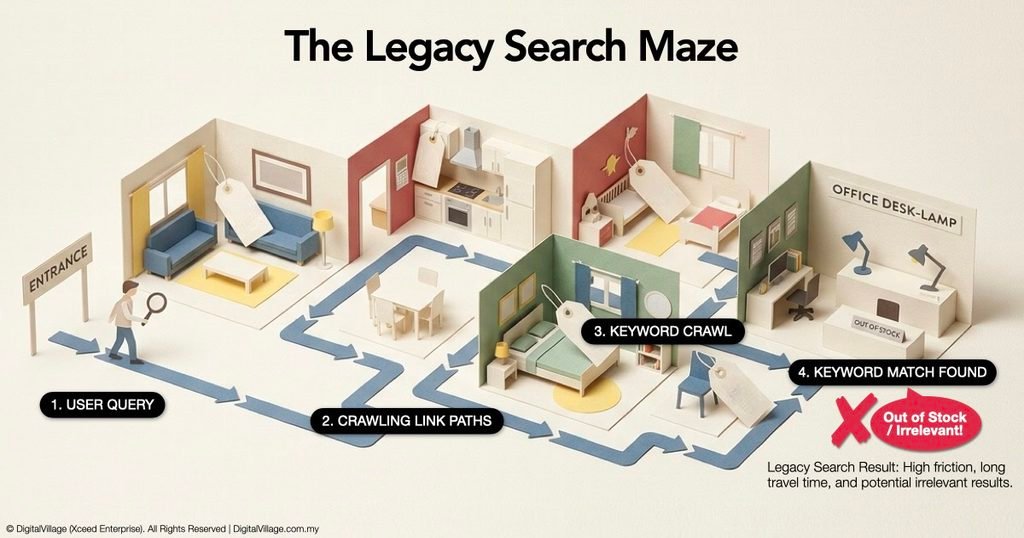
Consequently, websites that repeatedly tagged their room displays with the words “desk lamp” ranked at the top—even if the lamp itself was out of stock or poorly built. Search engine optimisation was purely about keywords along a forced path rather than conceptual understanding.
Unlocking “Dark Data” for Executive Brand Visibility
Most enterprise companies sitting on mountains of valuable institutional knowledge are fundamentally invisible to modern AI models.
This hidden material—podcasts, internal presentations, panel keynotes, and white papers saved as static PDFs—is what engineers call dark data. Furthermore, legacy web crawlers treat these formats like locked display cabinets in an unlit corner of the showroom, completely missing the insights inside.
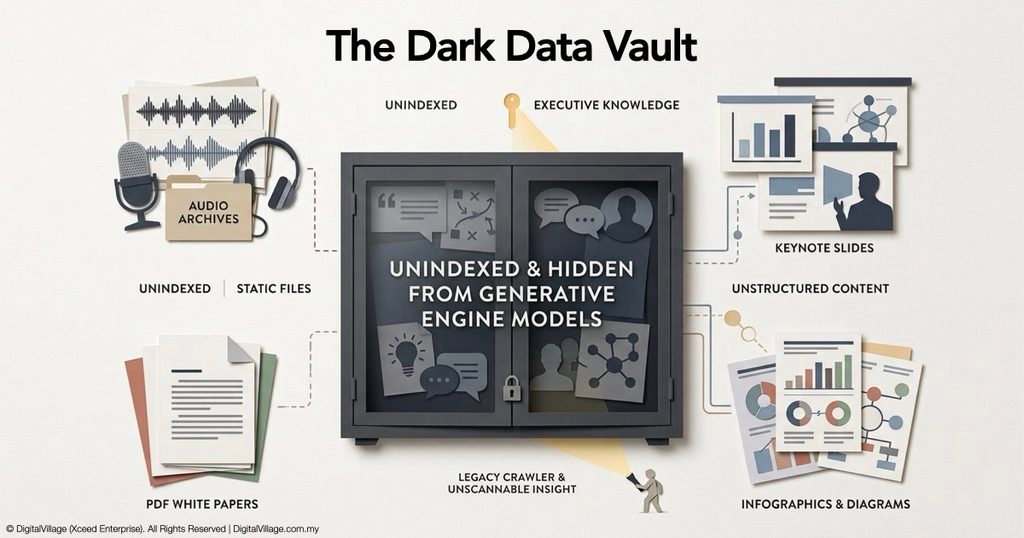
To capture true B2B thought leadership ROI, organisations must extract these latent ideas and format them into connected entities. When you systematically convert unstructured executive interviews into structured content, generative search engines can index and attribute every strategy directly to your leadership team.
AI Search Optimisation for B2B: Skipping Straight to Aisle 14, Bin 22
Now picture returning to IKEA with an instant digital concierge. Instead of walking the winding showroom path for 45 minutes, you enter the self-serve warehouse directly.
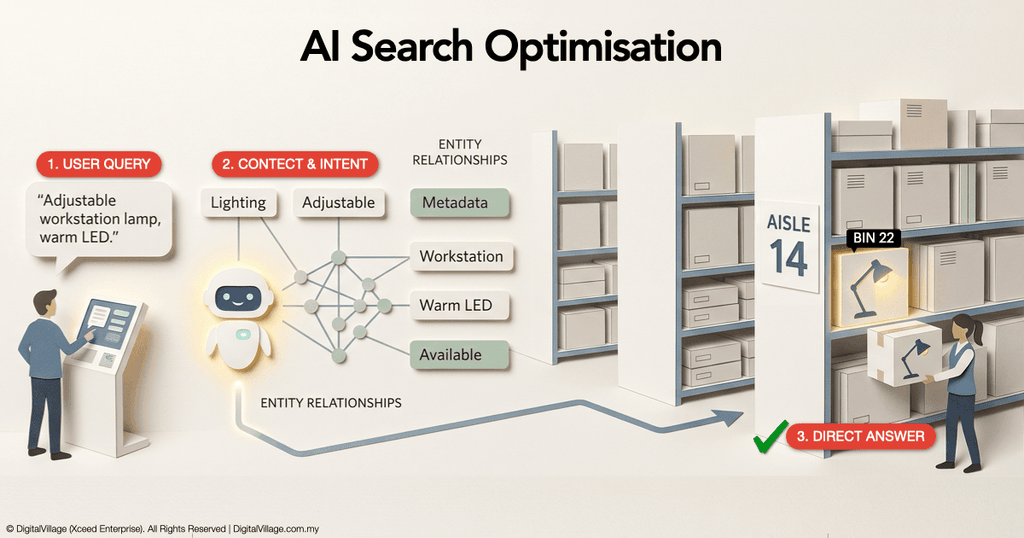
You ask for an adjustable workstation lamp with warm LED output. In a split second, the concierge bypasses the maze entirely, walking you directly to Aisle 14, Bin 22, and placing the exact flat-pack box in your hands.
That is precisely how Generative Engine Optimisation operates. AI models do not wander through web pages scanning for raw word matches; they parse explicit entity relationships and metadata coordinates. Similarly, when a potential client asks an AI model for executive leadership strategies, the model relies on structured entity data to pinpoint your exact answers instantly.
C-Suite Content Strategy: Building Data Congruency Across Platforms
To succeed in zero-click search environments, your content must maintain strict data congruency. This means your executive profiles, site schema, and published opinions must present a single, consistent narrative across every digital channel—much like matching an IKEA product’s article number across its box, catalogue, and assembly manual.
Furthermore, discrepancies between your executive LinkedIn profiles, corporate press releases, and site metadata confuse generative models. On the other hand, structured entity nodes explicitly tell answer engines who your leaders are, what they specialise in, and why their opinions carry weight.
Measuring B2B Thought Leadership ROI in Zero-Click Environments
Traditional metrics like page views and click-through rates no longer tell the full story. As buyers increasingly rely on direct AI answers, measuring B2B thought leadership ROI requires tracking brand citations, conversational sentiment, and AI referral traffic.
| Metric Focus | Legacy Search (SEO) | Generative Engine (GEO) |
|---|---|---|
| Primary Goal | Organic Clicks | Brand Citation & Mindshare |
| User Action | SERP Click-Through | Direct AI Recommendation |
| Value Metric | Page Views & Bounce | Entity Attribution Share |
Consequently, early adopters who optimise their executive data vaults today will capture the majority of generative search share. To dive deeper into the underlying mechanics that power these generative models, read our foundational guide on Entity Architecture: The Secret Language AI Search Engines Use to Recommend Your Business. Structuring your institutional content for machine readability remains the single fastest, most durable way to secure long-term digital authority.
Frequently Asked Questions
How does B2B thought leadership ROI change with AI search?
B2B thought leadership ROI shifts from tracking simple website traffic to measuring brand citations, entity authority, and direct recommendations inside generative search tools like ChatGPT and Perplexity.
What is dark data in executive content marketing?
Dark data refers to unindexed institutional knowledge locked inside static media formats—such as audio podcasts, video recordings, presentation decks, and unoptimised PDFs—that search engine crawlers cannot easily parse.
Why is AI search optimisation for B2B vital for executive visibility?
Generative engines process information as interconnected entities rather than plain text strings. Optimising your content structure ensures AI search engines cite your executives as authoritative primary sources.
How does Generative Engine Optimisation differ from traditional SEO?
Traditional SEO focuses on ranking web pages for specific user keywords. Generative Engine Optimisation focuses on structuring entity data, establishing factual authority, and ensuring generative models directly answer user queries using your brand’s insights.