In the digital landscape, every click is driven by a specific, human purpose. This “purpose” is what we call search intent. For a long time, SEO was a game of matching keywords like a rigid puzzle. Today, fueled by updates like Google’s Multitask Unified Model (MUM) and shifting human habits, search has become a nuanced conversation. If your business doesn’t understand the “why” behind a query, you are essentially whispering into a hurricane.
- The Evolution of Intent: In 2022, search intent has evolved from simple keyword matching to understanding complex, natural-language “conversations” influenced by AI models like Google’s MUM.
- The Power of Educational Selling: Providing high-value, intent-aligned content during the early stages of the buyer’s journey builds the necessary trust to convert informational seekers into transactional buyers.
- The 4 Pillars of Intent: A successful global content strategy must address the four distinct stages of user goals: Informational (learning), Navigational (finding), Commercial (investigating), and Transactional (buying).
- Relevance Over Rankings: Modern SEO success is measured by how accurately a brand’s content solves the specific “why” behind a user’s query, rather than just appearing for high-volume keywords.
The Shift from Keywords to Conversations
Previously, a user might type “best project management software.” Now, searchers expect engines to understand complex needs, such as “lightweight project tool for a distributed team that integrates with Slack.” This evolution means that search intent is no longer just about the words—it’s about the specific context of the user’s life and workflow. Consequently, global brands must move beyond “rankings” and toward “relevance.”
The Sourdough Journey: A Study in Personal Search Intent

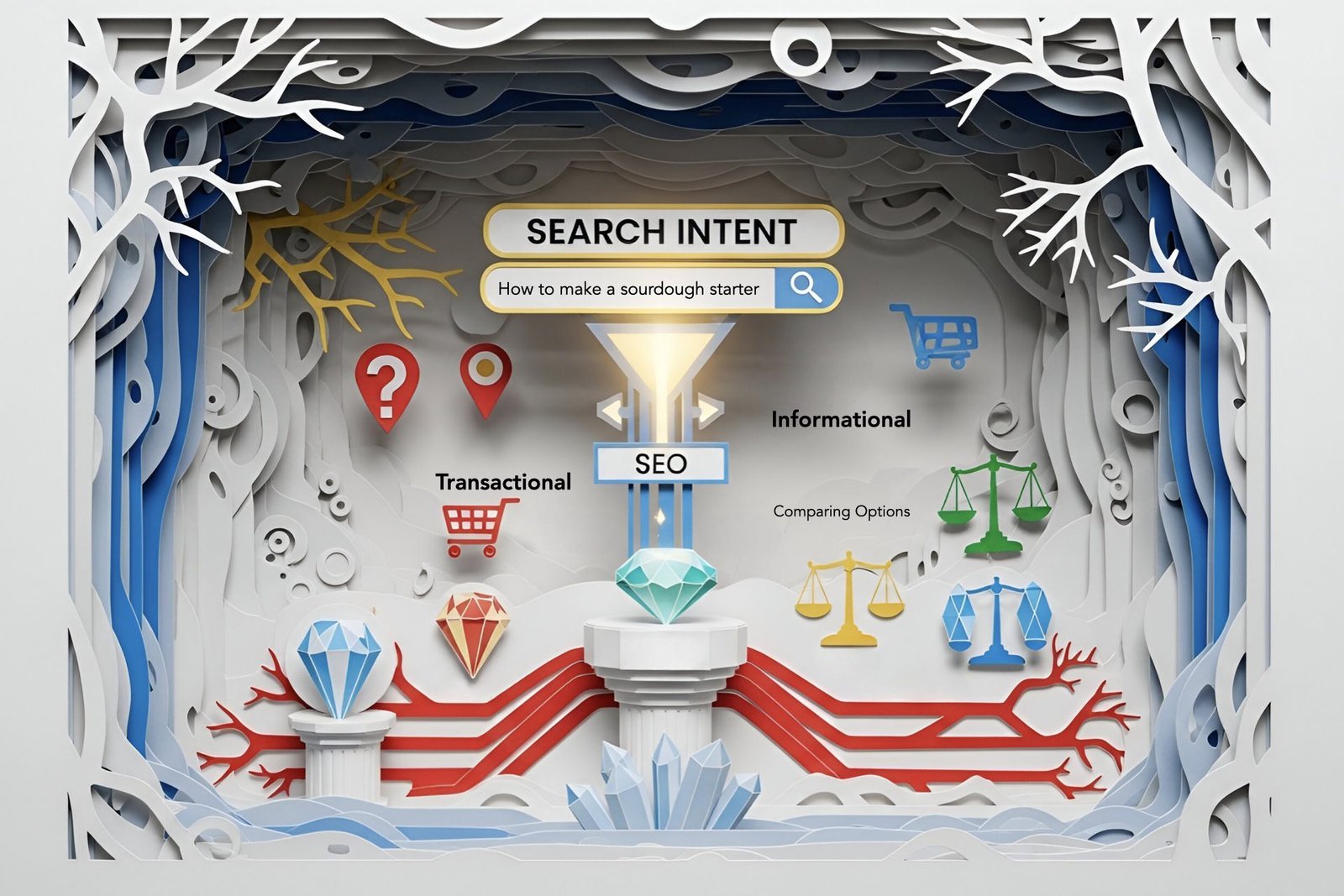
To understand how this looks in practice, let’s look at a typical journey that starts with a spark of interest and leads to a commercial decision. Imagine you have decided to learn how to bake sourdough:
- Informational (The “How-to” Phase): You start by searching, “How to make a sourdough starter from scratch?”You aren’t looking to spend money yet; you want a guide. A brand like King Arthur Baking wins here by providing a detailed, step-by-step tutorial. They aren’t selling; they are building authority.
- Navigational (The “Destination” Phase): Two days later, you remember a specific creator you saw on Instagram. You search for “Tartine Bakery sourdough recipe” to find their official site. You have a specific destination in mind and are using the search engine as a map.
- Commercial (The “Evaluation” Phase): Now that you’re committed, you realize you need better tools. You search for “Best Dutch oven for bread baking 2022”. You are comparing options and reading reviews to see which investment is worth it.
- Transactional (The “Purchase” Phase): Finally, you’ve made your choice. You search for “Buy Lodge 5-quart Dutch oven” or look for a “discount code for proofing baskets.” You have your credit card ready and are looking for the fastest, most reliable path to checkout.
Strategy: The Bridge from Helper to Hired
Knowing the sourdough baker’s journey illustrates that search intent is the psychological blueprint of human decision-making. In a sophisticated content strategy, recognizing this progression allows you to employ “Educational Selling.”This is the art of providing genuine, high-value solutions during the “Informational” phase to build an unbreakable foundation of trust.
By the time that same user shifts to “Transactional” intent, your brand is no longer a cold vendor; you are a proven mentor. This makes your product recommendation feel like a natural, helpful next step rather than a disruptive pitch. Neglecting this alignment means risking your potential customers to competitors who better understood the “why” behind the initial search.
Intent-driven content is the bridge that turns a casual visitor into a loyal customer. If you want to win, stop chasing the algorithm and start answering the human.
Frequently Asked Questions
1. How do I know if my content matches the right search intent?
The simplest way is to look at the current Search Engine Results Page (SERP). If you search for your target keyword and the top results are all “How-to” guides, the intent is Informational. If the results are product category pages, the intent is Transactional. If your page format doesn’t match the dominant format on the SERP, it is unlikely to rank.
2. Does search intent change over time for the same keyword?
Absolutely. Intent can be seasonal or driven by global events. For example, in early 2020, the intent for “masks” shifted overnight from “beauty/skincare” to “medical protection.” This is why regular content audits are essential to ensure your “Help-to-Hire” bridge is still leading to a relevant destination.
3. Can I target Informational and Transactional search intent on the same page?
It is a balancing act. While a long-form guide can include product links, trying to do too much often confuses the search engine. A better strategy is to have a dedicated Informational blog post that “sells the problem” and then links to a specific Transactional landing page that “sells the solution.”