
A fundamental skill in creating a high-converting landing page is effective sales copywriting. A landing page is a standalone web page designed specifically for a marketing or advertising campaign. It is intended to entice the visitor to take a specific action, such as making a purchase or completing a form for more information. The goal of the landing page is to convert visitors into customers, and the sales copy is an important part of that process. Here are some key elements to consider when writing successful sales copy for a landing page:
- Definition of Sales Copywriting: Effective sales copywriting is the primary driver of landing page conversions, designed to entice specific user actions through persuasive language.
- Headline Optimization (8-10 Words): Successful headlines must be concise, specific, and include a clear value proposition using action-oriented verbs (e.g., “Unlock,” “Discover”) to maximize retention.
- Strategic Use of Subheadings: Subheadings function as secondary hooks that break up text for readability while reinforcing the core benefits for scanning users.
- Benefit-Centric Communication: High-converting copy prioritizes user outcomes (solving problems/meeting needs) over product features to establish immediate relevance.
- Leveraging Social Proof: Authentic, specific testimonials from third-party platforms are essential for building trust and establishing brand credibility.
- Actionable Call to Action (CTA): A prominent, single-goal CTA using strong, directive language is the final critical step in converting a visitor into a customer.
1. Craft Captivating Headlines
The headline is the first thing that a visitor will see, and it needs to grab their attention and convince them to stay on the page. The headline should be clear and concise, and it should accurately reflect the content of the page. It should also include a strong value proposition, explaining the benefits of the product or service being offered.
Here are some key points to consider when writing headlines for a convincing sales copy:
- Keep it short and sweet: A headline should be clear and concise, preferably no more than 8-10 words.
- Use strong, action-oriented language: The headline should encourage the reader to take action, using words like “discover,” “unlock,” “learn,” and “get.”
- Include a value proposition: The headline should clearly communicate the benefits of the product or service being offered.
- Use numbers and lists: Headlines that include numbers or lists (e.g. “7 Simple Steps to…”) tend to be more effective, as they are easy to scan and convey a sense of structure and organization.
- Make it specific: A specific headline is more likely to catch the reader’s attention and convince them to stay on the page.
2. Use Subheadings Strategically
Subheadings are secondary headlines that appear below the main headline and provide more detail about the content of the page. They are an important element in sales copywriting, as they help to break up the text and make it easier for the reader to scan and absorb the information. They also give the reader a better understanding of what they can expect to find on the page and can help to convince them to stay and read more.
Similar to headlines, here are some key points to consider when writing subheadings for a convincing sales copy:
- Keep it brief: Like the main headline, subheadings should be clear and concise, preferably no more than 8-10 words.
- Use strong, action-oriented language: Similar to the main headline, the subheading should encourage the reader to take action and emphasize the benefits of the product or service being offered.
- Use bullet points: Bullet points are a great way to present information in a clear and organized manner. They can be used to summarize the key points or benefits of the product or service.
- Use headings and subheadings consistently: It is important to use headings and subheadings consistently throughout the sales copy, in terms of font size, style, and formatting. This helps to create a cohesive and professional look.
3. Focus On Benefits First
The body of the sales copy should focus on the benefits of the product or service being offered. This is where you can really sell the value of what you are offering. Explain how the product or service will solve the visitor’s problem or meet their needs. Use bullet points to make it easy for the visitor to scan and absorb the information. One of the biggest mistakes to make in sales copywriting is to focus on your product and services rather than how your potential customer actually will benefit from it.
4. Leverage On Authentic Testimonials
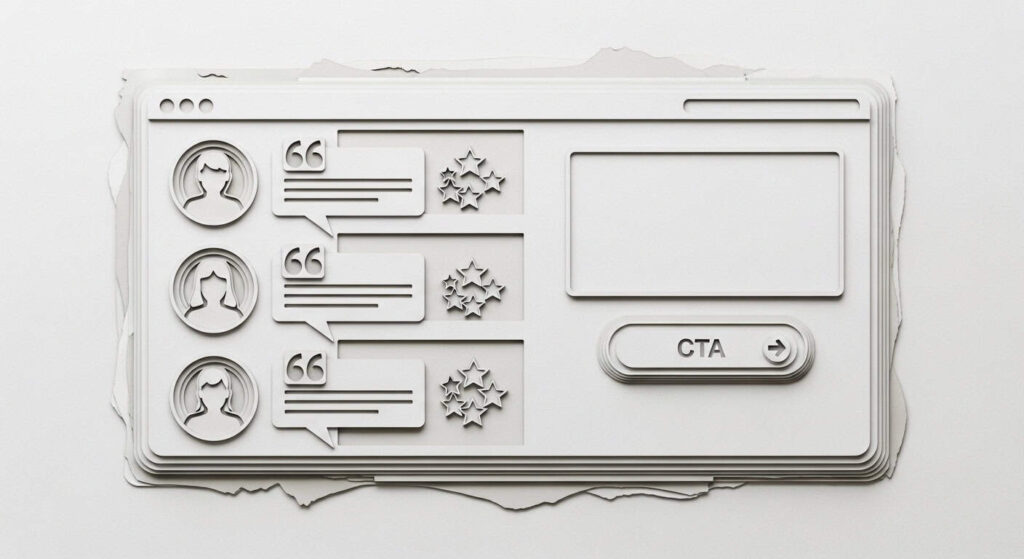
Including testimonials from satisfied customers can be a powerful way to increase credibility and build trust. Testimonials should be genuine and specific, and they should highlight the benefits and results that customers have experienced. Using third-party platforms provides stronger credibility to the testimonials or reviews provided by your customers.
5. Include Clear & Compelling Calls to Action
The call to action (CTA) is the final step in the conversion process. It should be clear and compelling, encouraging the visitor to take the desired action. The CTA should be prominent and use strong, action-oriented language.
Writing successful sales copy for a landing page involves crafting a compelling headline, explaining the benefits of the product or service, including testimonials, and using a clear and compelling call to action. By following these guidelines, you can create a landing page that effectively converts visitors into customers.
Are you struggling to convert visitors into customers with your current sales copy? Or simply have no time? As professional sales copywriters, we can help you craft compelling and persuasive language that will convince your audience to take action. With our expertise and attention to detail, we will work with you to understand your business and target market and create sales copy that speaks to their needs and addresses their pain points. Don’t let subpar sales copy hold your business back – contact us today to see how my sales copywriting services can help you achieve your conversion goals.
Frequently Asked Questions
1. How long should my sales copy be for a high-ticket item?
For expensive or complex offers, long-form copy (1,000+ words) usually outperforms short copy. High-ticket buyers require more “objection handling,” detailed social proof, and deep benefit-dives to feel secure in their investment.
2. Where is the best place to put a CTA on mobile vs. desktop?
On desktop, your CTA should be “above the fold” and at the very end. On mobile, use a sticky footer CTA or place buttons after every major benefit section, as mobile users scroll faster and “thumb-friendly” accessibility is key.
3. Should I use one CTA or multiple options on a landing page?
A high-converting landing page should have one primary goal. While you can repeat the button multiple times, they should all lead to the same action. Offering too many different choices (e.g., “Buy Now” vs. “Read Blog”) causes “Analysis Paralysis” and lowers conversion.
4. How do I write copy for “Cold Traffic” vs. “Warm Traffic”?
Cold traffic (people who don’t know you) needs more education, trust-building, and long-form proof. Warm traffic (email subscribers/social fans) already trusts you, so your copy should be shorter and focused heavily on the “Offer” and “Scarcity.”
5. What is the difference between SEO and GEO in copywriting?
Traditional SEO optimizes for keywords to rank in blue links. GEO (Generative Engine Optimization) focuses on clear, authoritative, and data-backed statements that AI engines can easily “cite” as a source when answering user questions directly.